 +44 (0)1202 330077
+44 (0)1202 330077
+44 (0)1202 330077

![[Photo: James Robinson Taylor]](https://images.sandemanyachtcompany.co.uk/uploads/boats/142x100_796_12099862996aa1b37e34224.jpg)
![[Photo: James Robinson Taylor]](https://images.sandemanyachtcompany.co.uk/uploads/boats/142x100_796_5604384366aa1b37f623f4.jpg)
![[Photo: James Robinson Taylor]](https://images.sandemanyachtcompany.co.uk/uploads/boats/142x100_796_1508966826aa1b37c2408a.jpg)
![[Photo: James Robinson Taylor]](https://images.sandemanyachtcompany.co.uk/uploads/boats/142x100_796_15995642736aa1b3782c105.jpg)
![[Photo: James Robinson Taylor]](https://images.sandemanyachtcompany.co.uk/uploads/boats/142x100_796_3728699476aa1b3794cf85.jpg)
![[Photo: James Robinson Taylor]](https://images.sandemanyachtcompany.co.uk/uploads/boats/142x100_796_17532238886aa1b37a8d935.jpg)
![MARGA - C.O. Liljegren 51 ft International 10-Metre Gaff Cutter 1910/2015 [Photo: James Robinson Taylor]](https://images.sandemanyachtcompany.co.uk/uploads/boats/142x100_796_77388584969fdc6fa8238a.jpg)
![MARGA - C.O. Liljegren 51 ft International 10-Metre Gaff Cutter 1910/2015 [Photo: James Robinson Taylor]](https://images.sandemanyachtcompany.co.uk/uploads/boats/142x100_796_66587893169fdd1dae3062.jpg)
![Lee bow [Photo: James Robinson Taylor]](https://images.sandemanyachtcompany.co.uk/uploads/boats/142x100_796_54706875969fdd11a0cddf.jpg)
![Starboard bow [Photo: James Robinson Taylor]](https://images.sandemanyachtcompany.co.uk/uploads/boats/142x100_796_29377264869fdc6f8cac76.jpg)
![Starboard quarter [Photo: James Robinson Taylor]](https://images.sandemanyachtcompany.co.uk/uploads/boats/142x100_796_113022545869f2396a04fcd.jpg)
![Starboard quarter [Photo: James Robinson Taylor]](https://images.sandemanyachtcompany.co.uk/uploads/boats/142x100_796_87116607669f8af9248608.jpg)
![Aft deck view forward [Photo: James Robinson Taylor]](https://images.sandemanyachtcompany.co.uk/uploads/boats/142x100_796_17396795469f8af8f6d013.jpg)
![Aft deck view forward [Photo: James Robinson Taylor]](https://images.sandemanyachtcompany.co.uk/uploads/boats/142x100_796_91264687669f8af8d522df.jpg)
![Port quarter [Photo: James Robinson Taylor]](https://images.sandemanyachtcompany.co.uk/uploads/boats/142x100_796_101551629969f8af9357bab.jpg)
![Port quarter [Photo: James Robinson Taylor]](https://images.sandemanyachtcompany.co.uk/uploads/boats/142x100_796_209284298569f8af9473120.jpg)
![Transom [Photo: James Robinson Taylor]](https://images.sandemanyachtcompany.co.uk/uploads/boats/142x100_796_92907459969f8af95ddcb1.jpg)
![View forward over aft deck [Photo: James Robinson Taylor]](https://images.sandemanyachtcompany.co.uk/uploads/boats/142x100_796_198268581669f9be168dd23.jpg)
![View forward over aft deck [Photo: James Robinson Taylor]](https://images.sandemanyachtcompany.co.uk/uploads/boats/142x100_796_108641395669f9be14d2ed9.jpg)
![View aft from cockpit [Photo: James Robinson Taylor]](https://images.sandemanyachtcompany.co.uk/uploads/boats/142x100_796_118146428269f9be1a0fd51.jpg)
![View forward over cockpit [Photo: James Robinson Taylor]](https://images.sandemanyachtcompany.co.uk/uploads/boats/142x100_796_105344450469f9be1bc2732.jpg)
![View forward over cockpit [Photo: James Robinson Taylor]](https://images.sandemanyachtcompany.co.uk/uploads/boats/142x100_796_145598953869f9be1d617c6.jpg)
![View forward over aft deck [Photo: James Robinson Taylor]](https://images.sandemanyachtcompany.co.uk/uploads/boats/142x100_796_48960592569f9be1f180f8.jpg)
![View forward over cockpit [Photo: James Robinson Taylor]](https://images.sandemanyachtcompany.co.uk/uploads/boats/142x100_796_48743346269f9be20ad68f.jpg)
![Tiller [Photo: James Robinson Taylor]](https://images.sandemanyachtcompany.co.uk/uploads/boats/142x100_796_39753471469f9be21e2530.jpg)
![Helm cockpit view aft [Photo: James Robinson Taylor]](https://images.sandemanyachtcompany.co.uk/uploads/boats/142x100_796_64947955269f9be235ade9.jpg)
![Cockpit view aft [Photo: James Robinson Taylor]](https://images.sandemanyachtcompany.co.uk/uploads/boats/142x100_796_51231256969f9be24af649.jpg)
![Cockpit view forward [Photo: James Robinson Taylor]](https://images.sandemanyachtcompany.co.uk/uploads/boats/142x100_796_164228901469f9be2636e4b.jpg)
![Forward cockpit [Photo: James Robinson Taylor]](https://images.sandemanyachtcompany.co.uk/uploads/boats/142x100_796_129630310269f9be29530db.jpg)
![View forward over house [Photo: James Robinson Taylor]](https://images.sandemanyachtcompany.co.uk/uploads/boats/142x100_796_125416885869f9be2bdec9f.jpg)
![View forward from port side deck [Photo: James Robinson Taylor]](https://images.sandemanyachtcompany.co.uk/uploads/boats/142x100_796_160316937469f9be2d2ecf2.jpg)
![View forward from starboard side deck[Photo: James Robinson Taylor]](https://images.sandemanyachtcompany.co.uk/uploads/boats/142x100_796_56735991569f9be2ee0d80.jpg)
![Deck details [Photo: James Robinson Taylor]](https://images.sandemanyachtcompany.co.uk/uploads/boats/142x100_796_161367140669f9be311da97.jpg)
![View aft at mast [Photo: James Robinson Taylor]](https://images.sandemanyachtcompany.co.uk/uploads/boats/142x100_796_107254294769f9be33006d6.jpg)
![Mast from aft [Photo: James Robinson Taylor]](https://images.sandemanyachtcompany.co.uk/uploads/boats/142x100_796_15439347169f9be342da3f.jpg)
![Foredeck forward [Photo: James Robinson Taylor]](https://images.sandemanyachtcompany.co.uk/uploads/boats/142x100_796_208142702169f9be35763b7.jpg)
![Forehatch [Photo: James Robinson Taylor]](https://images.sandemanyachtcompany.co.uk/uploads/boats/142x100_796_32937429869f9be3706b99.jpg)
![Foredeck [Photo: James Robinson Taylor]](https://images.sandemanyachtcompany.co.uk/uploads/boats/142x100_796_140835430669f9be385e4e6.jpg)
![Bowsprit heel [Photo: James Robinson Taylor]](https://images.sandemanyachtcompany.co.uk/uploads/boats/142x100_796_203431744269f9be3a1f6f8.jpg)
![Stemhead details [Photo: James Robinson Taylor]](https://images.sandemanyachtcompany.co.uk/uploads/boats/142x100_796_140243071969f9be3c3979c.jpg)
![Companionway [Photo: James Robinson Taylor]](https://images.sandemanyachtcompany.co.uk/uploads/boats/142x100_796_76226118369f9be2a96df4.jpg)
![Companionway [Photo: James Robinson Taylor]](https://images.sandemanyachtcompany.co.uk/uploads/boats/142x100_796_47130453669fa04d115056.jpg)
![Navigation area to port - view forward [Photo: James Robinson Taylor]](https://images.sandemanyachtcompany.co.uk/uploads/boats/142x100_796_110222931669f9c84d9ac42.jpg)
![Saloon view forward [Photo: James Robinson Taylor]](https://images.sandemanyachtcompany.co.uk/uploads/boats/142x100_796_3760210969f9c84f8becf.jpg)
![Saloon view forward [Photo: James Robinson Taylor]](https://images.sandemanyachtcompany.co.uk/uploads/boats/142x100_796_127827550869f9c85556d36.jpg)
![Saloon forward [Photo: James Robinson Taylor]](https://images.sandemanyachtcompany.co.uk/uploads/boats/142x100_796_150804865369fa14268d0d7.jpg)
![Fo'c'sle [Photo: James Robinson Taylor]](https://images.sandemanyachtcompany.co.uk/uploads/boats/142x100_796_41234198769f9c85859492.jpg)
![Fo'c'sle forward [Photo: James Robinson Taylor]](https://images.sandemanyachtcompany.co.uk/uploads/boats/142x100_796_62873436669f9c859b2350.jpg)
![View aft from fo'c'sle [Photo: James Robinson Taylor]](https://images.sandemanyachtcompany.co.uk/uploads/boats/142x100_796_66045871269fa04c7de3fc.jpg)
![View aft at mast [Photo: James Robinson Taylor]](https://images.sandemanyachtcompany.co.uk/uploads/boats/142x100_796_187887252369fa04c9b9d86.jpg)
![Saloon view aft [Photo: James Robinson Taylor]](https://images.sandemanyachtcompany.co.uk/uploads/boats/142x100_796_87214113769fa04cb6f4bd.jpg)
![WC/ shower compartment to starboard aft [Photo: James Robinson Taylor]](https://images.sandemanyachtcompany.co.uk/uploads/boats/142x100_796_169477600369fa04ccbc9a8.jpg)
![Mission control [Photo: James Robinson Taylor]](https://images.sandemanyachtcompany.co.uk/uploads/boats/142x100_796_198331261069fa04ce631ad.jpg)
![Companionway view aft [Photo: James Robinson Taylor]](https://images.sandemanyachtcompany.co.uk/uploads/boats/142x100_796_150294786069fa04cfc8498.jpg)
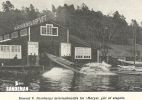
![Technical Launching, 2015 [Photo: Ron Valent FB]](https://images.sandemanyachtcompany.co.uk/uploads/boats/142x100_796_11514127886a00ed4d1350a.jpg)
![Hauled out [Photo: Classic Yacht Experience FB]](https://images.sandemanyachtcompany.co.uk/uploads/boats/142x100_796_7427024386a021ed2b982b.jpg)
![MARGA (right) leading a mixed class start possibly at Gothenburg [Photo: SCIF.SE Bildarkivet]](https://images.sandemanyachtcompany.co.uk/uploads/boats/142x100_796_9741063616a00674610fc3.jpg)
![At the Stockholm Olympic Regatta 1912 [Photo: SCIF.SE Bildarkivet]](https://images.sandemanyachtcompany.co.uk/uploads/boats/142x100_796_5111210276a00674485816.jpg)
| Designer | C.O. Liljegren |
|---|---|
| Builder | Hästholmsvarfvet, Stockholm, Sweden |
| Date | 1910 |
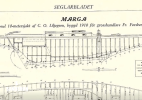
| Length overall | 55 ft 0 in / 16.76 m |
| Length deck | 51 ft 3 in / 15.62 m |
| Length waterline | 33 ft 0 in / 10.06 m |
|---|---|
| Beam | 9 ft 1 in / 2.78 m |
| Draft | 5 ft 11 in / 1.8 m |
| Displacement | 12 Tonnes |
| Construction | Mahogany on galvanised steel and oak |
| Engine | 30 hp Yanmar diesel |
|---|---|
| Location | Italy |
| Price | EUR 575,000 |
These details are provisional and may be amended
Why do some yachts survive a century or more to inform us about the past, be celebrated and enjoyed, while others don’t? The answer is often a combination of a lot of luck and the quality of original construction-design, build, and materials. The C.O. Liljegren designed International 10-Metre MARGA, a participant in the 5th Summer Olympic Games at Stockholm in 1912, has certainly been lucky in all respects: originally built from the best of materials, restored by a team of Italian experts and artisans, and over the past decade campaigned with gusto and success on the Mediterranean classic regatta circuit. One of her most recent highlights was to win the Rolex Cup at Les Voiles de Saint-Tropez with double Olympic gold medallist Torben Grael at the helm. She’s ready for more of that!
Interested in MARGA in more detail.
CLASSIC BOAT MAGAZINE AWARDS 2016
- Winner Restoration of the Year (All Sizes)
TECNOMAR, FIUMICINO, ITALY 2011-2015
- Total rebuild
- Reusing existing elements and methods where possible
- With exception of laminated oak timbers (instead of steamed),
- construction was true to original specifications and 1st International Rule
- 1979 Wood keel retained
- All new mahogany planking
- Almost all new steel frames
- All new laminated oak timbers
- New rig and sails
- New engine and systems
Not surprisingly perhaps for a curious and ambitious young graduate naval architect of Gothenburg's Chalmers Technical Educational Institution (now Chalmers University of Technology), Carl Liljegren’s first significant yacht designs of the early 1890s, for KSSS (Kungliga Svenska Segelsällskapet / Royal Swedish Yacht Club), were clearly influenced by the lines of Nathanael Herreshoff’s seminal GLORIANA of 1891.
Liljegren’s fascination with Herreshoff’s output seems to have been such that during the mid-1890s he apparently travelled to America and worked at Bristol, Rhode Island for ‘Captain Nat’ when the big story was the design and construction of DEFENDER for the defence of the 1895 America’s Cup against Lord Dunraven’s G.L. Watson designed VALKYRIE III.
He returned to Sweden in time to flourish: as an inovative yacht designer during a purple patch on Sweden’s west coast and the Kattegat, when fascinating, extreme light displacement, beautifully engineered boats by both Liljegren and the highly talented ‘amateur’ Gunnar Mellgren (by day job an industrialist) enjoyed fierce competition; in the early years of performance powerboating with his long and narrow racing design DUO of 1907, developed in collaboration with eventual aviation pioneers Frithiof G. Ericson, and Carl Cederström, triumphant in Stockholm until the hydroplane era; and from 1907 in the design of successful International Rule 6, 7, 8, 9, and 10 Metre racing yachts.
In 1908 Liljegren's 8-Metre design VINGA won the silver medal during the London Olympic Games sailing regatta at Ryde. 1910, the year of MARGA’s build, was a particularly busy and successful one for Liljegren with his 6-Metre AGNES II winning the One Ton Cup at Keil. And in 1912 another of his 6-Metre designs, KERSTIN, was a bronze medallist at the Stockholm Olympics.
But the call of America became too strong and in 1923 he emigrated there, settling at Quincy, Massachusetts until his death in 1944 having spent the rest of his working life as a respected naval architect at the principally warship building Fore River Shipbuilding Company.
©2026 Iain McAllister/ Sandeman Yacht Company Ltd.
C.O. LILJEGREN DESIGN No. 144
Name: most probably a combination from the names of first owner Fredrik W. Forsberg's mother (Maria) and wife (Gabriella).
The striking International Rule 10-Metre MARGA is a lucky boat. She was built from the best of materials, including – even at the end of their practically useful life under any sailing stress – the high quality Swedish steel frames that kept her exquisite hull in shape while nonetheless eventually suffering the ignominy of dramatic ‘high-rise’ alterations to her superstructure. Even this ‘houseboat’ period in her long life needs celebrated, though, because it’s what kept her going and afloat – to be available for restoration long after her original purpose.
Perhaps MARGA’s best stroke of luck was to be purchased from Denmark in the early 2000s by Marco Vian, an Italian classic yacht enthusiast looking for a retirement project, and trucked to storage at the Tecnomar yard on the River Tiber near Rome. It proved too daunting a project at that time, but she was in the right place, a hub of classic yacht maintenance and restoration activity, and eventually at the right time, when MARGA’s present owner could do the right thing by her led by the experienced hand of Enrico Zaccagni.
The necessary labour of love (and, of course, money) that gave new life to this thoroughbred is detailed elsewhere here. The story of her birth circumstances and active years as conceived follows here.
According to ‘Nordens Båtar’, the three-volume ‘bible’ of Swedish sailing up to 1939, MARGA was built to take part in the 50th Anniversary Regatta of GKSS (Göteborgs Kungliga Segelsällskap / Royal Gothenburg Yacht Club). Her commissioning owner, successful Gothenburg merchant and foreign consul Fredrik W. Forsberg, was a leading light of the club and renowned amateur helmsman. Before commissioning MAGDA, Forsberg was particularly known as owner of the remarkable Gunnar Mellgren designed fin and bulb ‘skimming dish’ ESTER of 1901 - once she had finished upholding Sweden’s honour for KSSS (Kungliga Svenska Segelsällskapet / Royal Swedish Yacht Club) against Finland for the then highly prestigious Tivoli Cup. Remarkably, more than a century later the restored MARGA and ESTER raced in the 2019 edition of Les Voiles de Saint-Tropez.
ESTER represented a fascinating period in Swedish yacht racing when west coast owners based around Gothenburg were prepared to commission and race extreme fin and bulb, and centreboard, designs based on the American Seawanhaka Rule, while in the east, the more sober citizens of Stockholm eventually preferred their yachts rather more wholesome. Prior to the moderation introduced with the International Rule in 1907, fascinating light displacement designs by both Liljegren and the highly talented ‘amateur’ Mellgren (by day job an industrialist) enjoyed fierce competition in the west. Almost a decade of owning the scow-like ESTER may suggest that Forsberg had an influence on MARGA’s unusual and highly recognizable wide aft sections.
The need to preserve a general reputation, rather than just among his friends, made Liljegren probably the more conservative of these two Gothenburg designers. He wholeheartedly embraced designing for the new International Rule, while Mellgren was forced by the Swedish financial crash of 1907 to concentrate on his business life and, we understand, never returned to yacht designing.
Why MARGA was built in the Stockholm area for a planned for regatta in Gothenburg remains a mystery to us, but she was obviously very well built and presumably sailed west via the Göta Canal system. She gained a reputation as a good boat in a breeze. ‘Nordens Båtar’ described her as “stately”, with, “the most beautiful rig any Swedish boat had.”
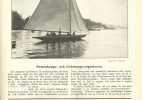
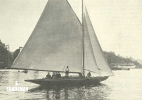
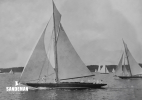
If not earlier, in July 1912 MARGA returned to the waters of her birth to participate in the 1912 Olympics Regatta off Nynäshamn south of Stockholm. The format of the early Olympics sailing events is often hard to fathom. Two boats represented Sweden in the four-boat 10-Metre Class, and it was the Finish built, Swedish owned Alfred Mylne design KITTY that took Class Gold after two light airs races, with MARGA fourth despite leading at both starts. One of MARGA's crew at Nynäshamn was 20-year-old Bertil Bothén who would later become a successful yacht designer, and may have been assisting Liljegren at this time. Apparently in a rematch later in the season MARGA was victorious.
Fredrik Forberg’s next 10-Metre, MARGA II, was built at Gothenburg in 1914 by Carl Liljegren’s brother, Gustaf (“G.R. Liljegren”) to a William Fife Junior (“III”) design, and at some point our MARGA ended up in the far north of the Gulf of Bothnia, at Luleå in the ownership of another merchant/ wholesaler (perhaps there was a business connection?), Wilhelm Thurfjell. Here she became the family’s cruiser/racer.
One particularly long July 1924 cruise is recorded in Thurfjell’s logs: an approximately 800 sea miles round cruise to Stockholm. Herring was the staple diet, “… taken straight from the sea, with dill and potatoes, what a meal!”.
After that, MARGA disappears from both Swedish and Lloyd’s Register records. She is known to have been based in Finland and Sweden until eventually surfacing in Denmark in the late 20th Century where she became a houseboat – and where Marco Vian found her and the story of her restoration commences.
After the four year award winning restoration detailed above, MARGA made her Mediterranean classic yacht regatta debut at the 2015 edition of Les Voiles de Saint-Tropez. She has been a regular participant ever since with the learning curve of getting the best out of this thoroughbred gradually achieving podium places. With double Olympic Gold Medalist and America's Cup helmsman Torben Grael at the helm, in 2024 MARGA won the Rolex Cup at Les Voiles de Saint Tropez.
©2026 Iain McAllister/ Sandeman Yacht Company Ltd
2024
1st - Rolex Trophy, Les Voiles de Saint Tropez (Lars Grael helming)
2nd - 13th Gstaad Yacht Club Centenary Trophy
2022
2nd in Class - Argentario Sailing Week
2019
2nd in Class - Le Vele d’epoca a Napoli
4th Overall - Argentario Sailing Week
2nd in Class - Les Voiles de Saint-Tropez
2018
2nd in Class - Les Voiles d'Antibes
3rd in Class - Les Voiles de Saint-Tropez
2017
2nd Overall - Le Vele d’epoca a Napoli
Part-composite
- Oak wood keel (1979)
- 29 mm Mahogany planking
- Alternate galvanised steel frrames
- Galvanised steel plate and strap floors at frames
- Iron strap floors at timbers
- Iron hanging knees
- Laminated oak timbers (copper fastened)
- Douglas fir beam shelves and bilge stringers
- Deck structure of Douglas fir and ash
- Teak laid deck on marine ply epoxy substrate
- Mahogany coveing boards and king planks
- Coachroof structure of Douglas fir clasd in mahogany
- Other superstructure of mahogany
GENERAL
- Teak laid deck (over marine ply/ epoxy substrate
- Mahogany covering boards, toerails and kingplank
- Mahogany superstructures
- Bronze deck fittings
AFT DECK
- Cheek block/ runner purchase padeyes port & starboard
- Mainsheet horse
- 3 x teak and bronze cleats
- Padeyes, cleats and blocks for running backstay purchases
- All associated wood/ bronze blocks leathered
- Double leaf lazarette/ mainsheet trimmer hatch
LARGE COCKPIT
Deck Level Helm Section Aft
- Deck as seating
- Footwell
- Teak grating sole
- Believed original, finely carved tiller
- Engine throttle lever
- Yanmar engine panel
Deep forward cockpit section
- Coaming faired to house
- Mahogany benches fore and aft (quarter berths under)
- Teak grating sole
- Double leaf door and sliding hatch at companionway
HOUSE
- Butterfly skylight over saloon
- 3 x Bronze opening ports port & starboard
SIDE DECKS
- Padeyes; cleats; blocks for backstay and headsail sheet purchases
- All associated wood/ bronze blocks leathered
- Galvanised pin rails at shrouds port & starboard
- House sides extended to coamings around mast base
FOREDECK
- Forehatch to fo'c'sle
- Spinnaker pole stowage to starboard
- Grab rail at kingplank
- Bronze and teak mooring cleats port & starboard
- Bowsprit heel fitting incorporating inner forestay anchor point
- Gammon iron and whiskers at stemhead
- 'Dolphin striker'
- Bowsprit cranse incorporating outer forestay anchor point
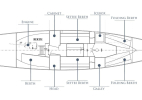
ACCOMMODATION FOR FOUR IN TWO CABINS
- Possibility for two further folding berths forward
DOWN 4 x STEPS TO CABIN SOLE
- Quarter berths to port and starboard
WC/ SHOWER COMPARTMENT TO STARBOARD
- Tecma electric toilet
- Stainless steel wash hand basin
- Shower head as mixer tap
NAVIGATION AREA TO PORT
- Fiddled chart table; stowage under
- Ship's electrical panel
- Plotter/ Multi Function Display
- VHF Radio
- Analog battery and tank gauges
FORWARD TO SALOON
- Red leather upholstered settee berths port & starboard
- Buttoned leather back rests
- Sideboards forward to port & starboard of mast
- Lockers and drawers under
- Lockers outboard
FO'C'SLE
- Ice box to port
- Galley to starboard
- Otherwise open for sails and lines stowage
RIG
By Chantier Naval Pasqui, Villefranche-sur-Mer, France (2015)
- Gaff cutter rig
- Hollow spruce spars
- Spinnaker pole
SAILS
By North; Sail Area 165.1 sq m
- Designed by Guido Cavalazzi
- Mainsail
- Jackyard topsail
- Jib-headed topsail
- Staysail
- No. 1 Jib
- No. 2 Jib
- Asymmetric downwind sail
CANVASWORK
- Mainsail boom cover
- Covers for superstructure
MECHANICAL
- 30 hp Yanmar diesel
- Side-prop system, offset to port
- Stainless steel propeller shaft
- 3-Blade Maxprop propeller
ELECTRICAL
- TBC
TANKAGE
- TBC
NAVIGATION
- Raymarine Multi Function Display at chart table
- Autopilot
COMMUNICATIONS
- Raymarine RAY55E VHF Radio at chart table
TBC
- Personalised boom crutch
- Fenders
- Mooring warps
Contact us to discuss MARGA in more detail.
These particulars have been prepared from information provided by the vendors and are intended as a general guide. The purchaser should confirm details of concern to them by survey or engineers inspection. The purchaser should also ensure that the purchase contract properly reflects their concerns and specifies details on which they wish to rely.
