 +44 (0)1202 330077
+44 (0)1202 330077
+44 (0)1202 330077
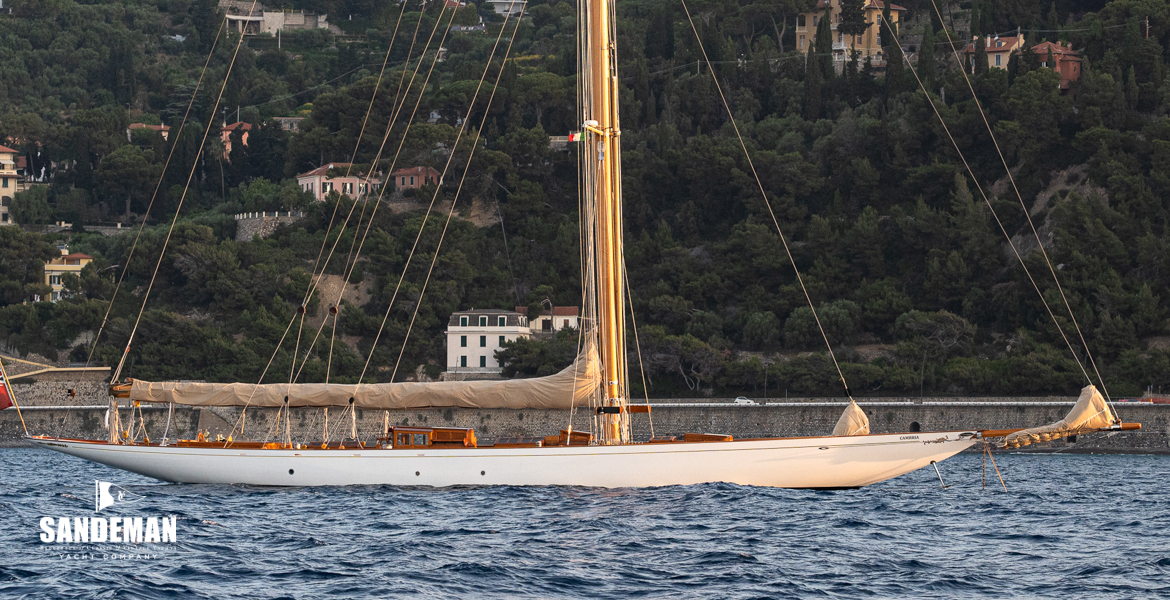
![CAMBRIA - William Fife III 111ft 'Big Class' Cutter 1928-2016 [Photo: James Robinson Taylor]](https://images.sandemanyachtcompany.co.uk/uploads/boats/142x100_792_208301610069ba9c70bdcdd.jpg)
![Port bow [Photo: James Robinson Taylor]](https://images.sandemanyachtcompany.co.uk/uploads/boats/142x100_792_7207464669b70e8aa03a5.jpg)
![Ghosting [Photo: James Robinson Taylor]](https://images.sandemanyachtcompany.co.uk/uploads/boats/142x100_792_166614565269b70e8e62b19.jpg)
![Port Quarter [Photo: James Robinson Taylor]](https://images.sandemanyachtcompany.co.uk/uploads/boats/142x100_792_87312012169baefef0a6ff.jpg)
![Full and by [Photo: Nigel Sharp]](https://images.sandemanyachtcompany.co.uk/uploads/boats/142x100_792_52448086869b70e5797510.jpg)
![Reefed [Photo: Nigel Sharp]](https://images.sandemanyachtcompany.co.uk/uploads/boats/142x100_792_44503866769b70e337d055.jpg)
![Windward [Photo: Nigel Sharp]](https://images.sandemanyachtcompany.co.uk/uploads/boats/142x100_792_7824751069b70e37ec58d.jpg)
![Starboard quarter [Photo: Nigel Sharp]](https://images.sandemanyachtcompany.co.uk/uploads/boats/142x100_792_151917521569b70e3e9e16a.jpg)
![Afterguard [Photo: Nigel Sharp]](https://images.sandemanyachtcompany.co.uk/uploads/boats/142x100_792_172403231569b70e42c6484.jpg)
![Lee bow [Photo: Nigel Sharp]](https://images.sandemanyachtcompany.co.uk/uploads/boats/142x100_792_93378398669b70e53200d1.jpg)
![Port quarter [Photo: Nigel Sharp]](https://images.sandemanyachtcompany.co.uk/uploads/boats/142x100_792_70905542969b70e66c1ff0.jpg)
![Cannes Règates Royales [Photo: James Robinson Taylor]](https://images.sandemanyachtcompany.co.uk/uploads/boats/142x100_792_170805288569b70e94379e4.jpg)
![Downwind [Photo: James Robinson Taylor]](https://images.sandemanyachtcompany.co.uk/uploads/boats/142x100_792_151958623069baf0001b942.jpg)
![With a bone in her teeth [Photo: James Robinson Taylor]](https://images.sandemanyachtcompany.co.uk/uploads/boats/142x100_792_78110509069baeff69eb18.jpg)
![Fife Dragon [Photo: James Robinson Taylor]](https://images.sandemanyachtcompany.co.uk/uploads/boats/142x100_792_10843626769b70eb784ece.jpg)
![Fingertip control [Photo: Nigel Sharp]](https://images.sandemanyachtcompany.co.uk/uploads/boats/142x100_792_162492502369b70e7857a34.jpg)
![Starboard bow [Photo: James Robinson Taylor]](https://images.sandemanyachtcompany.co.uk/uploads/boats/142x100_792_15823321476a2c14f037a9f.jpg)
![Forward of the beam [Photo: James Robinson Taylor]](https://images.sandemanyachtcompany.co.uk/uploads/boats/142x100_792_10081032216a2c14eef07ac.jpg)
![Starboard quarter at anchor [Photo: James Robinson Taylor]](https://images.sandemanyachtcompany.co.uk/uploads/boats/142x100_792_20598595666a2c14edd259b.jpg)
![Starboard quarter at anchor [Photo: James Robinson Taylor]](https://images.sandemanyachtcompany.co.uk/uploads/boats/142x100_792_16666467556a2c14eca0a08.jpg)
![From aft at anchor [Photo: James Robinson Taylor]](https://images.sandemanyachtcompany.co.uk/uploads/boats/142x100_792_20472748806a2c14eb193e9.jpg)
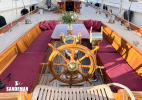
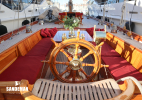
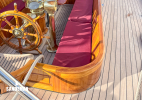
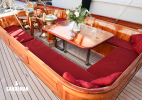
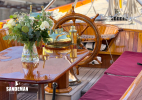
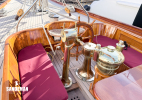
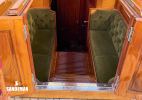
![Saloon view forward to port [Photo: James Robinson Taylor]](https://images.sandemanyachtcompany.co.uk/uploads/boats/142x100_792_10344186116a2ac06a025cd.jpg)
![Saloon view to starboard [Photo: James Robinson Taylor]](https://images.sandemanyachtcompany.co.uk/uploads/boats/142x100_792_3523630156a2ac06ce21a3.jpg)
![Saloon view to starboard aft [Photo: James Robinson Taylor]](https://images.sandemanyachtcompany.co.uk/uploads/boats/142x100_792_8017127976a2ac066c90b9.jpg)
![Saloon view to port [Photo: James Robinson Taylor]](https://images.sandemanyachtcompany.co.uk/uploads/boats/142x100_792_6941722656a2ac06b7162a.jpg)
![Saloon view to port [Photo: James Robinson Taylor]](https://images.sandemanyachtcompany.co.uk/uploads/boats/142x100_792_10622003746a2ac0688adb9.jpg)
![Saloon view aft [Photo: James Robinson Taylor]](https://images.sandemanyachtcompany.co.uk/uploads/boats/142x100_792_11915731786a2ac06e61938.jpg)
![Saloon view aft to accommodation [Photo: James Robinson Taylor]](https://images.sandemanyachtcompany.co.uk/uploads/boats/142x100_792_12186789846a2abd6144962.jpg)
![Passage aft [Photo: James Robinson Taylor]](https://images.sandemanyachtcompany.co.uk/uploads/boats/142x100_792_14634546026a2abd5dd1b7b.jpg)
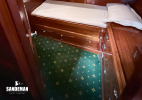
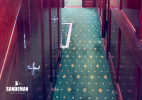
![View into guest twin bunk cabin to port [Photo: James Robinson Taylor]](https://images.sandemanyachtcompany.co.uk/uploads/boats/142x100_792_11748845606a2ab7c2e7ebd.jpg)
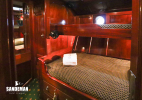
![Guest twin bunk cabin to port, view fwd [Photo: James Robinson Taylor]](https://images.sandemanyachtcompany.co.uk/uploads/boats/142x100_792_17748169736a2ab7c11c797.jpg)
![Guest double cabin to starboard [Photo: James Robinson Taylor]](https://images.sandemanyachtcompany.co.uk/uploads/boats/142x100_792_10786757156a2aba2bd9fc1.jpg)
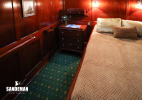
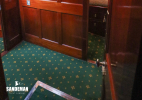
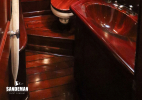
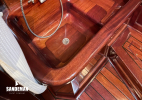
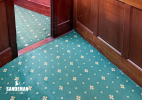
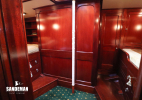
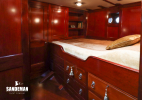
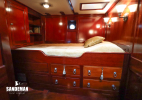
![Owner cabin view to port [Photo: James Robinson Taylor]](https://images.sandemanyachtcompany.co.uk/uploads/boats/142x100_792_14782526496a28306635b48.jpg)
![Owner cabin view to starboard [Photo: James Robinson Taylor]](https://images.sandemanyachtcompany.co.uk/uploads/boats/142x100_792_1370215636a282dee03d72.jpg)
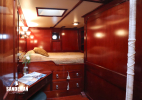
![Passage aft view forward [Photo: James Robinson Taylor]](https://images.sandemanyachtcompany.co.uk/uploads/boats/142x100_792_13625803396a2abf34199d4.jpg)
![The Fife Dragon [Photo: Nigel Sharp]](https://images.sandemanyachtcompany.co.uk/uploads/boats/142x100_792_137932117369b70e4908cca.jpg)
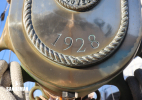
| Designer | William Fife III |
|---|---|
| Builder | William Fife & Son, Fairlie |
| Date | 1928 |
| Length overall | 131 ft 0 in / 39.93 m |
| Length deck | 111 ft 0 in / 33.83 m |
| Length waterline | 75 ft 0 in / 22.86 m |
|---|---|
| Beam | 20 ft 7 in / 6.28 m |
| Draft | 13 ft 9 in / 4.2 m |
| Displacement | 120 Tonnes |
| Construction | Composite: mahogany, teak and pitch pine on steel frame |
| Gross Tonnage | 68 Tons |
|---|---|
| Engine | Cummins 6CM06 6 Cyl 350 hp diesel |
| Location | France |
| Price | EUR 7,000,000 |
| Vat | VAT Not Paid |
These details are provisional and may be amended
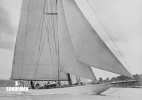
CAMBRIA (along with her 75-feet waterline length cousins ASTRA and CANDIDA, the first three ‘Big Class’ yachts to be bermudan-rigged from launch) has long been dubbed a 23-Metre. However, while designed to rate around that figure under the International Rule, a key element of her survival into the 21st Century – still a magnificent racer-cruiser; every sweet William Fife III curve still in place while supporting perhaps the tallest of all truly wooden masts – is her stout original construction to Lloyd’s then highest specifications for wood and wood-composite yachts, rather than to the lighter International Rule scantlings. Thus CAMBRIA, adored, maintained and respected for most of her life, has remarkably never required a total rebuild restoration. Her soul remains intact through recent major refits “sympathetic to her origins and respectful of her history”, and this is immediately apparent on first stepping aboard this happy, beautiful, historic, and very special classic yacht.
Interested in CAMBRIA in more detail.
“It’s never a rebuild. The rule is that nothing gets thrown away if we can possibly repair it and refit it. That’s always been the rule and it is what keeps the soul of the boat alive. Otherwise you just end up with a completely new boat.”
[Captain Chris Barkham to Nigel Sharp, Classic Boat magazine]
"Cambria’s [2014-2016] refit at SYS, under the eye of her long-serving captain Chris Barkham, is a significant milestone in her story. She is one of a dwindling number of large classics that has never had a comprehensive, keel-up restoration in the modern fashion, which often involves total reconstruction and very little if anything original left on board. Cambria has had her fair share of owners, and her fair share of refits too, but they have been sympathetic to her origins and respectful of her history, and this latest work fits in perfectly."
[The late Theo Rye, naval architect; intimate with CAMBRIA 2008-2016]
2023 - 2024 ROBBE & BERKING CLASSICS, FLENSBURG, GERMANY
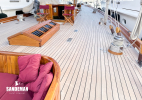
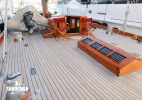
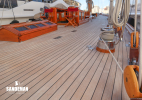
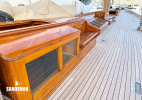
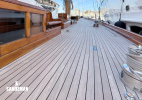
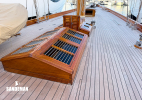
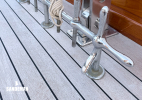
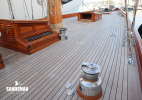
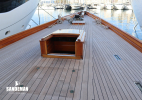
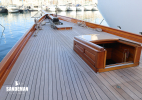
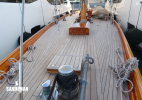
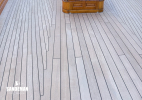
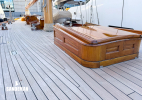
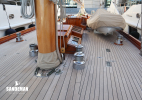
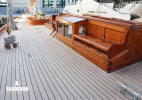
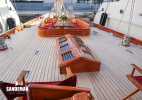
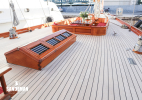
- New 23 mm x 65 mm teak laid deck
- on epoxy/ marine plywood/ Oregon pine substrate
- Bonded to substrate with Spabond epoxy and vacuum bagged
- Replacement of 15% of the steel beam shelves
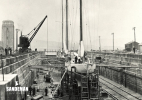
2014 - 2016 SOUTHAMPTON YACHT SERVICES, UK
- Mostly structural refit
- All work required to repair/ replace the steel frame
- 180 planks removed to allow access
- 70% of these planks repaired and refitted
- 30% of removed planks replaced
2008 - 2009 SOUTHAMPTON YACHT SERVICES, SOUTHAMPTON, UK
- Complete systems replacement
- Engine room rearrangement
- New main engine
- All new tankage
- Re-wiring
- Re-plumbing
2006 CLASSIC WORKS, LA CIOTAT, FRANCE
- New Sitka spruce mast by Classic Works, La Ciotat, France
- to designs by Aurélien Le Bas of Butch Design and Harry Spencer
- Alaskan Sitka spruce supplied by Touchwood BV
WILLIAM FIFE & SON YARD No. 758
- Launched 5th May 1928
- The longest yacht launched at Fairlie
Launched in May 1928, hull number 758, CAMBRIA was the first of a new generation of Big Class cutters. Finally, after years of racing by a mixed class of yachts under an unsatisfactory handicap system, there was an attempt to create a new harmonious Big Class. The years of austerity that followed the First World War were over, the rating rules were well established, and both Sir Mortimer Singer and Sir William Berry had commissioned new ‘75-footer’ (length waterline) cutters for the 1928 season. Singer’s ASTRA was designed by Charles E. Nicholson and built by Camper & Nicholsons, Berry’s CAMBRIA was designed by William Fife and built by his family’s yard at Fairlie on the Firth of Clyde.
There could not have been a greater contrast between the owners of these two new cutters. Singer was an established yachtsman from a wealthy family (think sewing machines) trading up from the 12-Metre Class; Berry was a newcomer and as such relied on the advice of experts. First among these was Brooke Heckstall-Smith, secretary of the Yacht Racing Association and editor of Yachting World magazine, one of many titles in Berry’s media portfolio.
Sir William Berry’s rise to prominence is one of the greatest “rags to riches” stories; all the more so since he was one of only a handful of 20th Century newspaper owner-editors. Leaving school at 13 he was apprenticed to a weekly newspaper in Merthyr, South Wales; six years later he moved to London. With a capital of 100 pounds he single-handedly edited, collected advertising, and distributed his own magazine; within a few years he had secured a foothold in the publishing industry. In 1915 he borrowed money to buy the moribund Sunday Times and became its editor in chief. This was the start of a phenomenally successful period of empire building. Within a few years he had acquired the Financial Times from Sir John Ellerman, The Hulton Press from Lord Rothermere and the Amalgamated Press (magazines) from the executors of Lord Northcliffe. These were followed by the purchase of the largest newsprint manufacturer and the ailing Daily Telegraph from Lord Burham, by which time Berry had created the largest media empire of the time.
With business came social position – a baronetcy and later his elevation to the rank of viscount (Camrose) – and the formation of one of the great British collections. Berry had tremendous taste, he bought avidly and eclectically: Old Masters, British pictures and furniture, oriental carpets, porcelain, glass and silver. The world began to take notice in 1927 when he bought van Dyke’s Portrait of Abbe Scaglia, one of the artist’s finest works. In 1935 he bought Hackwood Park from Lord Bolton to house his collection, where it remained until dispersed on the death of his son, the 2nd Viscount Camrose, in 1998.
It was in the midst of this whirl of collecting that Berry ordered CAMBRIA, famously asking his wife if she too might like a similar yacht, an offer she declined. Success in yachting would bring an altogether new prestige. King George V dominated the Big Class with his Britannia and to enter this peer group Berry needed to be prepared. Heckstall-Smith was ideally placed to advise him on the choice of designer but was far from impartial since he and Charles E. Nicholson had crossed swords several times over rating rules; Alfred Mylne would have been a gamble, so Heckstall-Smith directed Berry to William Fife.
Fife was a safe bet and eager to secure so prestigious an order. When contracts were exchanged on 1st August 1927, Fife was forced to write to Berry conceding, “that it is a term of the bargain that the specification is subject to such reasonable variations I may agree with Sir William Burton, acting on your behalf, without variation of price.” Burton was another of Heckstall-Smith’s appointees; he considered him “the greatest master of sailing a plain level match”. Certainly, Burton’s credentials were immaculate: he had dominated the 52-foot, 15-Metre and 19-Metre classes with his own yachts and helmed SHAMROCK IV in the 1920 America’s Cup match.
With trials completed on schedule, Cambria made her racing debut in Harwich at the first event of the 1928 season. It was a close race, and she won, setting the tone for what Berry would expect from then on. CAMBRIA, like ASTRA, was built to the Second International Rule (though to much stronger scantlings – as time has told) and had to rate between 21 and 24 metres with a time allowance to settle any differences. Had the class been limited to these modern Bermudan rigged yachts it would have worked. However, by necessity the class had to include the King’s G.L. Watson-designed BRITANNIA, built in 1893 and still gaff rigged, the ‘First Rule’ 23-Metre class yachts SHAMROCK (Fife) and WHITE HEATHER II (Fife) of 1908 and 1909, the one-off cutter LULWORTH (White), and the Herreshoff schooner WESTWARD. It was a rating officer’s nightmare and the racing was far from equitable.
Most significant amongst the problems that afflicted the new yachts was a limitation imposed on mast height. CAMBRIA, built to the upper size limits of the class, was particularly handicapped. Burton steered immaculately, but was penalised by the rating: the prizes went disproportionately to yachts 10 to 25 years older than CAMBRIA. The atmosphere on board deteriorated and whilst Berry may have retreated to the fully equipped wireless room he had had fitted on board for business purposes, Fife was left to lament that he knew all too well what was wrong.
For the 1929 season Fife designed a new gaff rig to circumvent the undue penalties applied to the Bermudan rig, but a late alteration in the rules suddenly allowed a taller mast and the modern rig thus remained. ASTRA was withdrawn from racing following her owner’s death, but the class was joined by the new Charles E. Nicholson-designed cutter, CANDIDA. The old gaffers still dominated on handicap, but amongst the new yachts CAMBRIA led what was in effect a class within a class.
In making his fifth and final challenge for the America’s Cup, Sir Thomas Lipton heralded the era of the American Universal Rule J-Class yachts. His SHAMROCK V outpaced all existing Big Class cutters, creating in effect a third class within the Big Class, but with this newcomer soon preoccupied with racing in America, CAMBRIA shared honours with the much improved CANDIDA, and both dominated ASTRA now racing under new ownership. However, the British Big Class could not survive in such a fragmented form. The J-Class had arrived and finally the older yachts were forced to do what they could to adapt to the new rule or give up. Again, King George V led the way, converting BRITANNIA to bermudan rig for the 1931 season, but other veterans soon gave up. Of the more recent cutters only the smaller ASTRA was able to convert successfully.
Sir William Berry had benefited from the advice of some of the most talented and most informed persons in yachting and campaigned his yacht in up to 50 races a year for three years, but like many others his efforts fell victim to rule makers that dominated the organisation of the sport. His most enduring contribution was CAMBRIA herself, the supremely beautiful cutter that has never wanted for admirers.
By early 1934 she had passed into the sadly brief ownership of Sir Robert McAlpine (2nd Baronet), a son of the founder of the famous construction dynasty. McAlpine was no stranger to a large and beautiful Fife yacht, having owned the racing schooner SUSANNE (immortalised in probably the most famous Beken of Cowes image) from 1924 until 1930.
Renamed LILLIAS after his wife and eldest daughter, McAlpine had her converted to a fast cruiser by Camper & Nicholsons. Her cutter rig was reduced, an 80 hp Gleniffer diesel auxiliary engine installed, and her racing yacht interior was adapted to that of a dedicated cruiser. She sailed north in the summer of 1934 to the waters of both her birth and of her owner, noted by the Oban Times as occasionally anchored in the bay through July and August. Let’s hope it was an idyllic summer in the Hebrides; in November 1934 McAlpine died suddenly aged 66 on board a liner bound for Cape Town.
It is believed that LILLIAS laid up on the Clyde winter 1934-35 and was purchased there in 1935 by Harold F. Giraud, a Turkish carpet merchant of French/ English parentage who was fabulously successful both in business and in balancing plenty of leisure time for his sporting interests. The shipping movements pages of The Journal of Commerce recorded LILLIAS’s departure from Algiers for Athens on 9th August 1935 during her long delivery voyage.
In Giraud’s ownership the great cutter became a cruiser based at Izmir, Turkey. Well-maintained, she made regular passages to Piraeus for periodic Lloyd’s Register inspections. According to Giraud’s son, Turkish Premier Atatürk was a guest on board, and she remained in Turkish waters, mainly Çeşme, until brief early 1960s ownership by Belgian, André J.M. Verbeke (or Verbeck) who restored her name to CAMBRIA and sold her on to his compatriot Georges Plouvier. In Plouvier’s ownership she began to voyage more extensively and came to the attention of American Michael Sears who acquired her at Marseille in 1972.
Sears embarked on a circumnavigation whose details remain sketchy, a dismasting off the Canaries is rumoured and it was he who re-rigged her as a ketch in 1975. By the time she reached Australian waters, Sears was forced to part company with her. Australian restaurateur Charlie Whitcombe took her over and mothballed her in Townsville near the Great Barrier Reef where she was eventually discovered by yachtsmen Iain Murray, Denis O’Neil and John David.
CAMBRIA’s beauty seduced them, she had survived virtually intact, her deck structures and fittings were still pure Fife and below her original and elegant mahogany interior needed just polish to bring it alive again. In structural terms, the mahogany planking on steel frame hull had partially degraded. After careful steel repairs and some planking renewal at Brisbane in 1995, CAMBRIA was strong again and ready to sail. A new deck was laid over the original and with light new systems she was perfectly in keeping with a fast racing yacht.
John David became the sole owner in 2001 and shipped CAMBRIA to Cowes where she was restored to Bermudan cutter rig for the America’s Cup Jubilee Regatta; the first time she had raced back in Britain since the 1930s. David was very impressed with the European classic yachting scene and decided to enter her in the Mediterranean Classic Yacht Circuit. She has been an active participant since that time
From 2004 under the new ownership and responsible direction and supervision of a new captain and his crew, CAMBRIA received a new hollow Spruce mast at La Ciotat, France in 2006, underwent a careful structural refit at Southampton, England in 2016, and receive a new teak/ composite deck at Flensburg, Germany in 2024. She has continued racing against the growing number of classic yachts, regularly outperforming her competitors in measured time, if not in terms of rating. CAMBRIA crossing the finish line as the first boat with her challengers far behind has become a common picture in the Mediterranean contests.
But it’s not all about racing. Fife’s ‘fast cruisers’ are famously easily driven: more than respectfully efficient sailing machines under reduced, easy to handle canvas. CAMBRIA’s owner and his family have enjoyed cruising the Mediterranean in between the busy racing schedule.
- Composite construction
- Built to Lloyd's ✠18A1 (then highest yacht classification - in-class until 1946)
- not to International Rule 'R' scantlings - partly explains survival to modern times
- Mahogany topsides planking
- Pitch pine and teak underbody planking
- on Intershield 300 epoxy coated steel frame
- Teak centreline structure
- Epoxy coated steel beam shelves
- Teak laid deck (2024)
- on epoxy/ marine plywood/ Oregon pine substrate
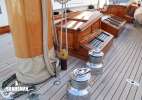
FROM AFT
AFT DECK
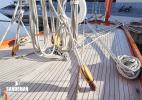
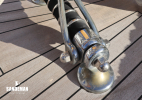
- Chromed bronze mooring fairleads at taffrail port & starboard
- Chromed bronze ensign staff socket at taffrail
- Chromed bronze mainsheet horse
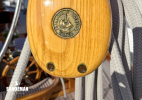
- Spencer Thetis Wharf ash and bronze blocks
- Lewmar hydraulic mainsheet winch
- Teak and chromed bronze mooring fairleads port & starboard
AFT SIDE DECKS
- Ash and bronze blocks at running backstay tackles
- 2 x Lewmar 77 hydraulic runners/ primary winches
- 1 x Lemon squeezer type deck prism
- 4 x Deck prisms
COCKPIT
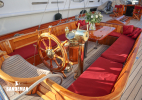
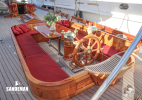
- Teak grating sole
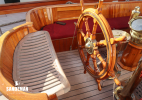
- Helm seat
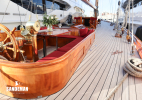
- Ship's wheel
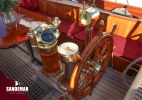
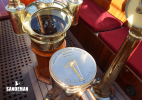
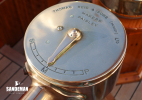
- Bronze Thomas Reid & Sons steering indicator
- Bronze binnacle with C. Plath steering compass
- Bronze engine control
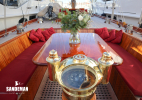
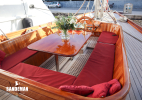
- Large cockpit table
FORWARD OF COCKPIT
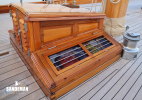
- Butterfly skylight over aft accommodation
- Lewmar 111 electric winches port & starboard (lower runners)
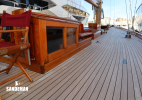
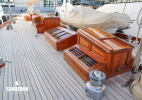
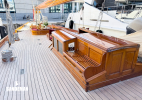
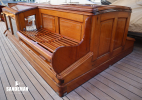
DOGHOUSE
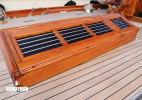
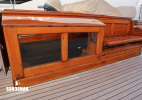
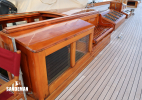
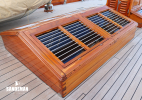
- Lean-to half butterfly skylights port & starboard
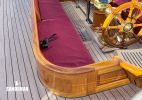
- Varnished bench seats over port & starboard
- Double companionway doors and sliding hatch
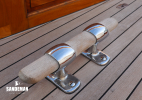
- 2 x Teak and chromed bronze cleats
- Butterfly skylights
- 2 x Foresail tracks port & starboard
- 2 x Lewmar 77 hydraulic winches
COMPANIONWAY SCUTTLE TO ENGINE ROOM
- Lean-to half butterfly skylights port & starboard
MAST POSITION
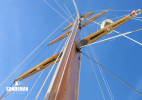
- 4 x Sets of spreaders
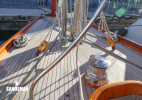
- 3 x Lewmar 77 manual winches at deck
- Chromed bronze pinrails at shroud bases outboard
FOREDECK
- Jib tracks port and starboard
- 3 x Deck prisms
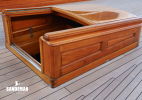
- Fife pattern fore-companionway scuttle
- Teak and chromed bronze mooring cleats port and starboard
- Fo'c'sle hatch
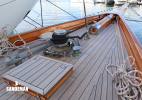
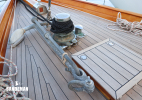
- Fisherman anchor on teak chocks to port
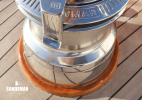
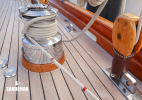
- Muir windlass - capstan and warping drums
- Chromed bronze Sampson posts
- Inner forestay fitting
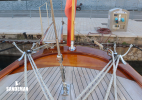
- Bowsprit
DOGHOUSE
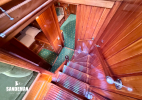
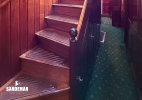
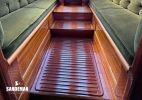
- 3 x Steps down
- Short settees port and starboard
- 7 x Steps down to accommodation sole
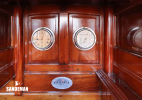
- Sestrel clock and barometer
MOVING AFT FROM FOOT OF STAIR
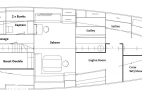
CAPTAIN AND MATE CABIN TO PORT
- 2 x Bunks
- Lockers and drawers
- Hanging locker
- 1 x Deckhead prism
- 1 x Deckhead light
- 2 x Reading lights
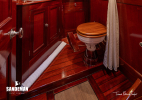
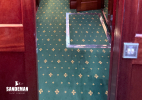
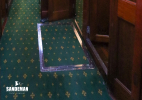
PASSAGE
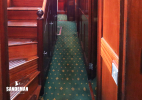
- Hanging locker
- Larder
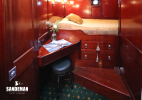
GUEST CABIN TO PORT
- 2 x Bunks
- Lockers and drawers
- Large hanging locker
- Half butterfly skylight in deckhead
- 1 x Hull port
- 1 x Deckhead prism
- 1 x Deckhead light
- 2 x Bulkhead lights
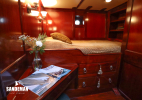
GUEST DOUBLE CABIN TO STARBOARD
- 1 x Double berth
- Large hanging locker
- Lockers and drawers
- Half butterfly skylight in deckhead
- 1 x Hull port
- 1 x Deckhead prism
- 1 x Deckhead light
- 2 x Bulkhead lights
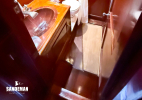
SHARED WC/ SHOWER COMPARTMENT
- Bath and shower
- Wash basin with hot and cold taps
- Automatic toilet
- Lockers
- 1 x Deckhead prism
- 1 x Deckhead light
- 1 x Bulkhead light
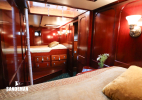
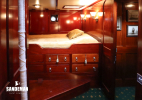
OWNER EN-SUITE STATEROOM AFT
- Double berths port and starboard
- Lockers and drawers
- Butterfly hatch in deckhead
- 2 x Hull ports
- 2 x Deckhead lights
- 4 x Bulkhead lights
EN-SUITE
- Shower
- Wash basin with hot and cold taps
- Automatic toilet
- Lockers
- 1 x Deckhead light
- 1 x Lemon squeezer prism
MOVING FORWARD FROM FOOT OF STAIR
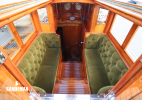
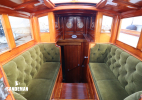
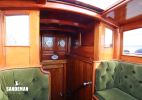
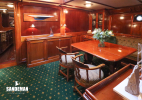
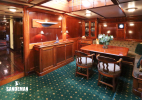
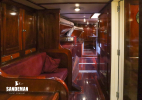
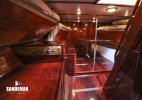
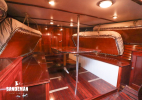
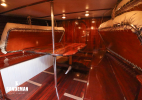
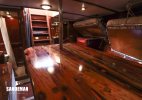
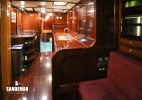
SALOON
Fine carpentry
- 2 x Hull ports
Dining to Starboard
- Large table
- L-settee
- 2 x Chairs
- Sideboards/ cabinets port and starboard
- Crockery and glassware stowage
To Port
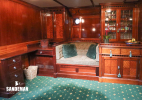
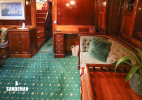
- L-shaped writing desk port aft
- Large banquette
- Handrail in deckhead
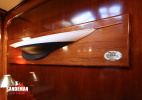
- CAMBRIA half model
Deckhead
- Butterfly skylight
- 4 x Deckhead lights
FORWARD TO GALLEY AND FO'C'SLE
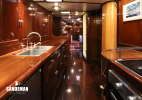
GALLEY
- Access from door in saloon port forward bulkhead
- Long work surface to port fore and aft of sink
- Mixer tap
- Miele induction oven and 4 x burner hob
- Large custom 250 L freezer, Frigomar by Penguin Marine
- 2 x Fridges, Frigomar by Penguin Marine
- Larder locker
- Lockers for plates and pots
- Banquette forward
- Engine room access to starboard
- Crew cabin access forward
- Half butterfly skylight
- 4 x Spotlights
- 3 x Deckhead lights
- 2 x Reading lights
FO'C'SLE/ CREW MESS
- Table on centreline
- 4 x Pipe cots
- Lockers under
- 5 x Deckhead lights
- Steps to forescuttle
- Bulkhead door forward to chain locker
RIG
- Hollow Sitka spruce mast (Classic Works, 2006)
- to designs by Aurélien Le Bas of Butch Design and Harry Spencer
- 4 x Sets of spreaders
- Jib pole at leading edge
- Spruce boom made from previous mizzen mast
- Douglas fir bowsprit
Standing Rigging
- Navtec Nitronic 50, various sizes from 40 to 150 (2024)
Running Rigging
- Always replaced as necessary; full maintenance log available
SAILS
By Doyle/ North Florence Legrand
All in secure, dry storage and serviced each season as required
- Racing mainsail (2003)
- Cruising mainsail (2001)
- Racing staysail (2008)
- Cruising staysail (2001)
- Racing yankee (2003)
- Cruising yankee (2001)
- Asymmetric A2 (2013)
- Asymmetric A4 (2013)
- Racing flying jib (2003)
- Cruising flying jib (2001)
- Tri-sail (2001)
CANVASWORK
Covers for:
- All deck structures, winches, tender, sail covers, drop bags, bowsprit
Awnings for:
- Main deck with side drop downs
- Crew awning
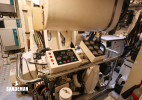
MECHANICAL-HYDRAULIC
- Cummins 6CM06 6 cyl 350 hp diesel main engine (2009)
- Hydraulic drives to twin props
MECHANICAL-ELECTRICAL
- Both generators serviced and rebuilt at relevant hours
- 1 x Onan 11 kVA generator (2009)
- new 2009, serviced and rebuilt at relevant hours
- 1 x Onan 13.5 kVA generator (2003)
ELECTRICAL
Mastervolt systems
All wiring new 2009
- 2 x 100 A Auto battery charger
- Mass sine 24/5000 inverter
- 12 x 2 V House battery gel cell
TANKAGE AND ASSOCIATED
All plumbing new 2009
Fuel
- Total 2350 L / 517 Gal in 3 x stainless steel tanks (2009)
Water
- 600 L Tank (2009)
- HEM Watermaker
Waste
- c 600 L Holding tank (2009)
- Hammond sewage treatment plant (2009)
NAVIGATION
All New July 2024:
- Furuno Navnet NXT radar
- Furuno Navnet TZT 2 touch multi function display
- Furno Navnet multifunction Black Box
- Furuno satellite compass
- A&T / B&G processor and MFD’s
- Depth sounder
- GP – 39 stand alone GPS
- 24/7 Maritime computer and Zoll monitor
- Nautical publications/ paper charts and Maxsea electronic charts
COMMUNICATIONS
- Sailor Sat C
- Icom marine HF and VHF with cockpit repeater
- All safety equipment to meet MCA Small Boat Code Category 2
- Fire extinguishers throughout, all certified
- Stat X engine room fire system, remotely activated
- 2 x new HERO 8-person life rafts
- KRU life jackets
- EPIRB
- Medical kit
- Aluminium Highfield SP 420 inflatable RIB tender (2022)
- Yamaha F 70 four stroke outboard motor
- Teak passarelle
- Vast supply of spares including deck hardware, interior fittings, and carpet
Contact us to discuss CAMBRIA in more detail.
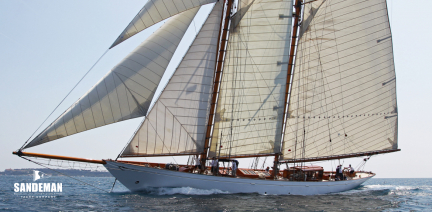
| Name | ALTAIR |
|---|---|
| Designer | William Fife III |
| Builder | William Fife & Son, Fairlie |
| Date | 1931 |
| Length deck | 107 ft 7 in / 32.8 m |
| Beam | 20 ft 6 in / 6.25 m |
| Draft | 13 ft 9 in / 4.2 m |
| Displacement | 155 Tons |
| Location | Spain |
| Price | EUR 6,500,000 |
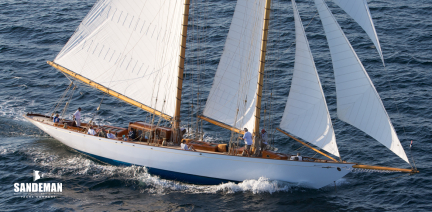
| Name | ADVENTURESS |
|---|---|
| Designer | William Fife III |
| Builder | William Fife & Son, Fairlie |
| Date | 1924 |
| Length deck | 82 ft 0 in / 25 m |
| Beam | 17 ft 1 in / 5.2 m |
| Draft | 9 ft 8 in / 2.95 m |
| Displacement | 61.6 Tons |
| Location | Caribbean |
| Price | USD 2,200,000 |
| Vat | VAT Not Paid |
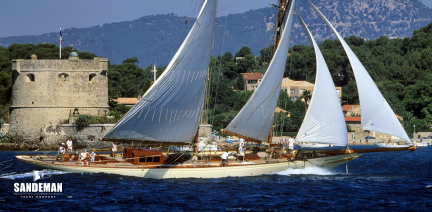
| Name | SUNSHINE |
|---|---|
| Designer | William Fife III |
| Builder | Myanmar Shipyards |
| Date | 2003 |
| Length deck | 101 ft 8 in / 31 m |
| Beam | 18 ft 4 in / 5.6 m |
| Draft | 11 ft 2 in / 3.4 m |
| Displacement | 80 Tons |
| Location | Spain |
| Price | EUR 1,900,000 |
| Vat | VAT Not Paid |
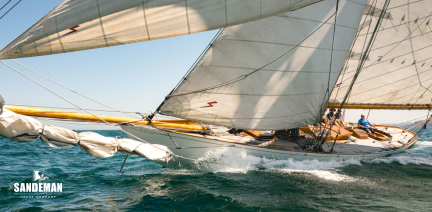
| Name | NAN OF FIFE |
|---|---|
| Designer | William Fife III |
| Builder | William Fife & Son, Fairlie |
| Date | 1897 |
| Length deck | 63 ft 2 in / 19.25 m |
| Beam | 11 ft 7 in / 3.53 m |
| Draft | 8 ft 6 in / 2.6 m |
| Displacement | 22 Tons |
| Location | France |
| Price | EUR 450,000 |
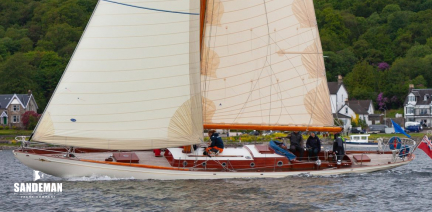
| Name | SIBYL OF CUMAE |
|---|---|
| Designer | William Fife III |
| Builder | William Fife & Son, Fairlie |
| Date | 1902 |
| Length deck | 51 ft 7 in / 15.72 m |
| Beam | 8 ft 8 in / 2.64 m |
| Draft | 6 ft 7 in / 2.01 m |
| Displacement | 11 Tons |
| Location | United Kingdom |
| Price | GBP 235,000 |
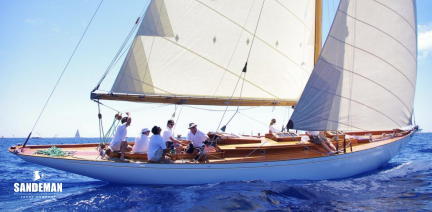
| Name | SOLWAY MAID |
|---|---|
| Designer | William Fife III |
| Builder | William Fife & Son, Fairlie |
| Date | 1940 |
| Length deck | 52 ft 1 in / 15.87 m |
| Beam | 10 ft 10 in / 3.3 m |
| Draft | 7 ft 6 in / 2.29 m |
| Displacement | 15.5 Tons |
| Location | France |
| Price | GBP 225,000 |
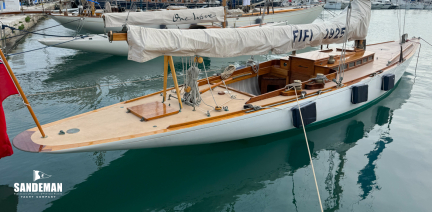
| Name | FIFI |
|---|---|
| Designer | William Fife III |
| Builder | Henry B. Nevins, City Island, New York |
| Date | 1925 |
| Length deck | 39 ft 8 in / 12.1 m |
| Beam | 7 ft 3 in / 2.2 m |
| Draft | 5 ft 9 in / 1.75 m |
| Displacement | 5.9 Tons |
| Location | Italy |
| Price | USD 190,000 |
These particulars have been prepared from information provided by the vendors and are intended as a general guide. The purchaser should confirm details of concern to them by survey or engineers inspection. The purchaser should also ensure that the purchase contract properly reflects their concerns and specifies details on which they wish to rely.
